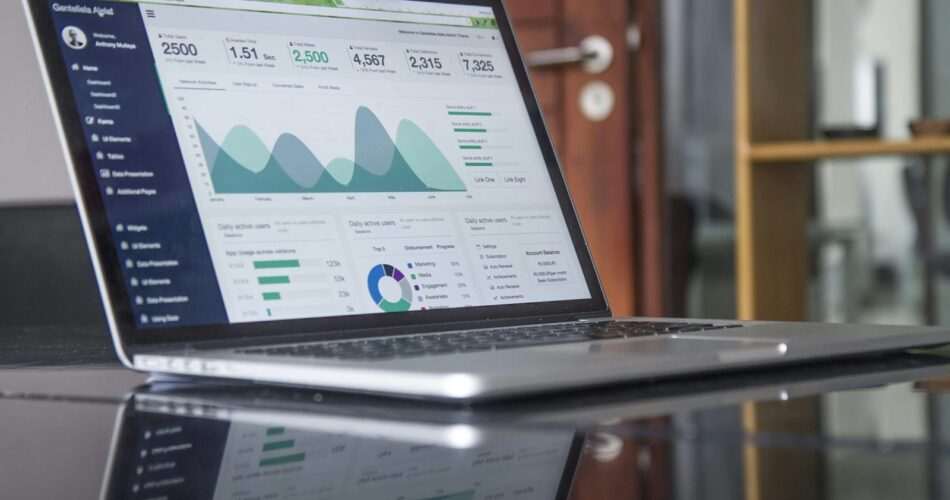
In today’s environment where competition intensifies in every sector, small and medium-sized enterprises (SMEs) must make data-driven decisions to survive. By looking at Business Intelligence (BI) systems in which large companies invest millions of lira, SME owners might think “This is too expensive for us,” remaining unaware of quite accessible alternatives.
In this article, we will examine how essential business intelligence tools really are for SMEs and offer practical solutions that do not require large budgets. Our aim is to enable businesses of all sizes to extract maximum value from their data.
What is Business Intelligence and Why is it Important for SMEs?
Key Components of Business Intelligence
Business intelligence is the sum of technologies, tools, and processes that enable businesses to make strategic decisions by analyzing the data they possess. BI systems are primarily composed of three main components:
Data Collection and Integration: Collecting data from different sources (sales systems, accounting software, websites, social media) in a centralized place.
Data Analysis and Processing: Turning collected data into meaningful information, identifying trends, and discovering patterns.
Visualization and Reporting: Presenting analysis results in an easy-to-understand manner through graphs, tables, and dashboards.
Benefits of Business Intelligence for SMEs
The main benefits that SMEs gain from using business intelligence tools are as follows:
- Fast and Accurate Decision Making: Ability to make objective data-driven decisions instead of intuition-based ones
- Cost Optimization: Determining which products/services are more profitable and optimizing resource allocation
- Customer Insight: Developing more effective marketing strategies by analyzing customer behaviors
- Operational Efficiency: Detecting inefficiencies in business processes and capturing opportunities for improvement
- Risk Management: Ability to detect potential issues in advance and take precautions
Key Challenges SMEs Face with Business Intelligence
Budget Constraints
The biggest obstacle SMEs face is the high cost of traditional BI solutions. Corporate BI systems generally include the following costs:
- Software license fees (ranging from 50-500 TL per user per month)
- Hardware and infrastructure investments
- Implementation and integration costs
- Ongoing maintenance and support fees
- Personnel training and consulting services
The total cost for an SME can even exceed 100,000 TL per year.
Lack of Technical Infrastructure
Most SMEs do not have IT infrastructure at a level to support complex BI systems. Common issues are:
- Data quality issues and lack of standardization
- Integration challenges of different systems
- Insufficient server capacity and network infrastructure
- Lack of data security and backup systems
Human Resources Challenges
Typically, SMEs experience the following human resource issues:
- Lack of expert personnel in data analysis
- Difficulty of current employees adapting to new technologies
- Those using BI tools are also busy with other tasks
- Lack of time and budget for ongoing education and development
Low-Cost Business Intelligence Alternatives
Open Source BI Tools
Open source BI tools offer cost-effective solutions for SMEs:
Apache Superset: Developed by Facebook, this tool has a modern and user-friendly interface. It supports various data sources and offers strong visualization features.
Metabase: Metabase, easy to install and use, has a simple interface that does not require technical knowledge. Ideal for small teams.
Grafana: Excellent for real-time data monitoring, Grafana is suitable for SMEs wanting to track operational metrics.
The cost of these tools consists only of hosting and support services, usually ranging from 20-100 TL per month.
Cloud-Based Solutions
Cloud-based BI solutions can be used without infrastructure investments:
Microsoft Power BI: With prices starting at 10 USD per user per month, it is a cost-effective option for SMEs thanks to Microsoft Office integration.
Google Data Studio: Google’s free BI tool provides excellent integration with Google Analytics, Ads, and other Google services.
Tableau Public: The free version of Tableau can be used provided you share your data publicly.
Simple Solutions with Excel and Google Sheets
For many SMEs, Excel or Google Sheets can meet basic BI needs:
Excel’s Powerful Features:
- Quick data summarization with pivot tables
- Pulling data from different sources with Power Query
- Free visualization with Power BI Desktop
- Automatic reporting with macros
Advantages of Google Sheets:
- Real-time collaboration capability
- Direct connection to Google Analytics and other services
- Free usage
- Automatic backup and cloud access
Freemium Model Tools
Many BI providers offer free versions with limited features:
Zoho Analytics: Free usage with a limit of 2 users and 10,000 records Klipfolio: Free dashboards for 2 users Sisense: Free trial versions for small datasets
Business Intelligence Implementation Strategies for SMEs
Step-by-Step Implementation Plan
1. Needs Analysis (1-2 weeks):
- What questions are being sought?
- What are the current reporting processes?
- What data is already being collected?
- What are the budget and resource constraints?
2. Tool Selection (1 week):
- List the tools that meet your needs
- Test the free versions
- Conduct a cost-benefit analysis
- Plan a small pilot project for final decision
3. Pilot Implementation (2-4 weeks):
- Start with a single department or process
- Gain experience with simple reports
- Collect user feedback
- Identify opportunities for improvement
4. Gradual Expansion (2-6 months):
- After a successful pilot, expand to other areas
- Move on to more complex analyses
- Increase the level of automation
- Make user training regular
Data Collection and Organization
Data Quality Principles:
- Accuracy: Reflect reality in data
- Integrity: Minimize problems with missing data
- Consistency: Ensure compatibility of data from different sources
- Timeliness: Update data on time
Practical Data Organization Tips:
- Define standard data entry formats
- Establish regular data cleaning routines
- Set automatic data validation rules
- Clarify data ownership and responsibilities
Analysis and Reporting
Effective Reporting Principles:
- Simplicity: Use understandable visuals instead of complex charts
- Focus: Limit each report to 3-5 core metrics
- Action-oriented: Specify the actions that can be taken after each report
- Regularity: Update and share reports at regular intervals
Successful SMB Business Intelligence Examples
Local Restaurant Chain Example
A restaurant chain with 5 branches in Istanbul achieved the following results using Google Sheets and simple analysis tools:
Implementation:
- Collected daily sales data in a single table
- Associated it with weather conditions, special days, and promotions
- Conducted product-based profitability analyses
Results:
- 15% cost savings (by removing low-profit products from the menu)
- 20% increase in customer satisfaction (by focusing on popular products)
- 30% reduction in spoilage with stock optimization
E-commerce SMB Customer Analysis
A 50-person e-commerce company, by performing customer segmentation with free tools, achieved:
Tools Used:
- Google Analytics (web traffic analysis)
- Google Data Studio (reporting)
- Excel (customer segmentation)
Benefits Gained:
- 25% increase in customer lifetime value
- 40% improvement in marketing ROI
- 35% increase in customer repeat purchase rate
Manufacturing SMB Operational Efficiency
A furniture manufacturer with 100 employees, using open source tools:
Metrics Tracked:
- Machine efficiency
- Production speed
- Error rates
- Material usage optimization
Success Results:
- 18% increase in production efficiency
- 22% decrease in error rates
- 12% material savings
How to Measure the Return on Investment of Business Intelligence?
Core ROI Metrics
Quantitative Metrics:
- Cost savings (automation, optimization)
- Revenue increases (better pricing, cross-selling)
- Efficiency improvements (time savings, error reductions)
- Customer value increases (loyalty, lifetime value)
Qualitative Benefits:
- Faster decision-making
- Improvement in strategic planning capacity
- Enhanced risk management capability
- Gaining a competitive advantage
ROI Calculation Example
Investment Cost:
- Software: 2,000 TL/year
- Training: 5,000 TL (one-time)
- Time investment: 1,000 TL/month
- Total Annual Cost: 19,000 TL
Benefits Gained:
- Inventory optimization: 30,000 TL savings
- Marketing efficiency: 25,000 TL revenue increase
- Operational improvements: 15,000 TL savings
- Total Annual Benefit: 70,000 TL
ROI Calculation: (70,000 – 19,000) / 19,000 = 268% ROI
Critical Success Factors
- Leadership Support: Upper management’s involvement in the project
- Clear Goals: Clearly defining what is intended to be achieved
- Data Quality: Reliable and accurate data infrastructure
- User Adoption: Acceptance and use of the system by employees
- Continuous Improvement: Regular review and optimization
Conclusion and Recommendations
Business intelligence tools are no longer a luxury for SMBs today, but a necessity to stay competitive. However, this does not necessarily mean you need to make large investments. With the right strategy and choice of tools, it is possible to achieve meaningful results even with limited budgets.
Your First Steps:
- Start today: Begin analyzing your existing data in Excel
- Think small: Instead of the entire business, choose a department or process as a pilot
- Try it for free: Test free versions of tools like Google Data Studio or Power BI
- Learn: Improve your data analysis skills from online resources
- Be patient: It might take time to see the benefits of BI investment, but it will definitely add value in the long run
Remember: Even the most expensive BI tool is better than not doing any data analysis at all. The important thing is not to have a perfect system but to start deriving value from your data. By starting with small steps, you can transition to more sophisticated solutions over time.
We wish you success on your business intelligence journey. If you need more information or support on this topic, do not hesitate to contact our expert consultants.