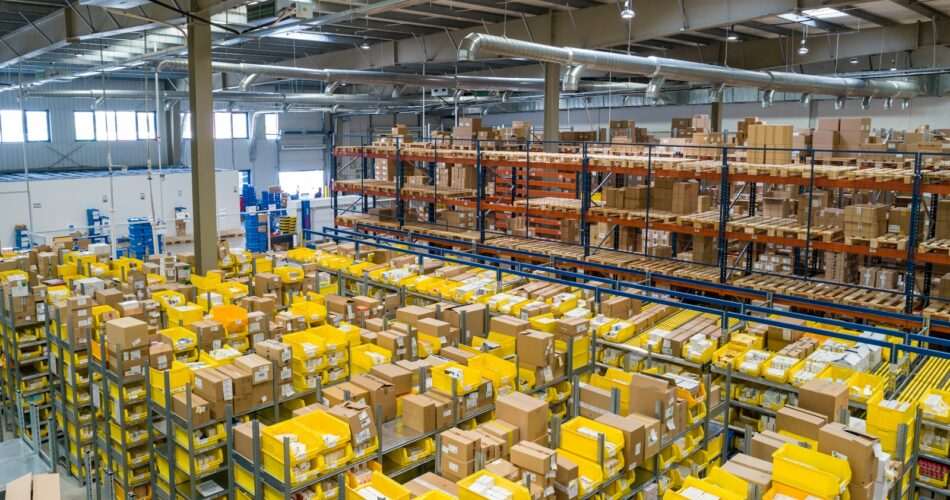
In the modern business world, optimizing supply chain operations to gain a competitive edge is no longer a luxury, but a necessity. Today, businesses operate in an environment where customer expectations are rapidly increasing, market dynamics are constantly changing, and global competitive pressure is intense. In these conditions, automating your inventory and order processes to ensure maximum efficiency in the supply chain is critical for your business’s sustainable growth.
Manual inventory tracking and order management processes can lead to numerous issues such as human errors, time lost, and high operational costs. Automated systems minimize these issues while providing real-time data flow, advanced analytics, and proactive decision-making capabilities, enabling businesses to achieve operational excellence.
In this comprehensive guide, you will find detailed information on the fundamentals of supply chain automation, the latest technologies, and implementation strategies. We will cover every topic from inventory tracking systems to order management solutions, from technology selection to ROI measurement.
Fundamentals of Supply Chain Automation
Challenges of Manual Processes
In traditional supply chain management, inventory tracking and order processes are largely carried out manually. This approach results in serious challenges, especially for growing businesses:
Human Errors: Manual data entry and calculations inevitably lead to errors. Inventory count errors, incorrect order quantities, and missing records significantly reduce operational efficiency.
Time Cost: Manual processes cause employees to spend valuable time on routine tasks. This leads to the wastage of resources that could be allocated to strategic activities.
Lack of Visibility: When real-time inventory status and order tracking cannot be performed, managers are forced to make critical decisions with delayed and incomplete information.
Scalability Issue: As business volume increases, the complexity of manual processes grows exponentially. This threatens growth targets.
Benefits of Automation Systems
Supply chain automation offers comprehensive solutions to overcome these challenges:
- Up to 90% Reduction in Error Rates: Automatic systems minimize human errors, enhancing operational reliability
- 70% Acceleration in Process Time: Automating routine tasks allows processes to be completed much faster
- Cost Optimization: A reduction in operational costs by 25-40% can be achieved
- Advanced Analytics: With big data analysis, trends can be forecasted and proactive decisions made
- Customer Satisfaction: Customer experience improves with faster deliveries and fewer errors
Inventory Tracking Systems and Technologies
RFID and Barcode Technologies
These technologies, which form the basis of modern inventory tracking systems, enable each product to be identified and tracked with a unique identity.
Barcode Systems: This cost-effective and widely used solution is an ideal starting point, especially for SMEs. QR codes and 2D barcodes offer greater data storage capacity, enabling advanced applications.
RFID Technology: This system, which operates with radio frequency, can read without physical contact. Ideal for large warehouses and high-volume operations, RFID tags automatically record product movements, providing real-time inventory visibility.
IoT Sensors: Smart sensors monitor environmental conditions (temperature, humidity, vibration) to ensure the quality of sensitive products is maintained.
Real-Time Inventory Visibility
For modern businesses, inventory visibility is key to operational success. Real-time systems offer the following advantages:
- Instant Stock Status Reports: The exact location and quantity of each product can be seen instantly
- Automatic Alert Systems: Automatic alerts at pre-determined thresholds for critical stock levels
- Multi-Channel Integration: Stock synchronization between physical stores, e-commerce, and other sales channels
- Predictive Analysis: Future inventory needs can be predicted using past data
ABC Analysis and Inventory Optimization
The ABC analysis methodology is critical for effective inventory management:
Category A Products (20% of products, 80% of value): Tight monitoring and optimized inventory levels for high-value productsCategory B Products (30% of products, 15% of value): Medium-level control and periodic reviewCategory C Products (50% of products, 5% of value): Simple control mechanisms and bulk order strategies
Order Management Automation
Automatic Order Generation
Smart order systems continuously track inventory levels and automatically generate orders based on pre-defined rules. This system includes the following components:
Minimum Stock Level Algorithms: Optimal minimum stock levels are determined for each product, and an automatic order is triggered when this level is reached.
Demand Forecast Models: Future demand is predicted using machine learning algorithms, and order quantities are optimized.
Supply Time Calculations: Optimal order timing is done by analyzing supplier performance data.
Supplier Integration
In modern supply chain management, supplier integration is a critical success factor:
- EDI (Electronic Data Interchange) Systems: Automatic data exchange with suppliers
- API Integrations: Real-time information sharing and order tracking
- Supplier Portals: Self-service ordering and tracking capabilities
- Performance Metrics: Continuous monitoring and evaluation of supplier performance
Customer Experience Improvements
Automatic order management significantly enhances customer experience:
- Order Status Tracking: Customers can track their orders in real-time
- Automatic Notifications: Constant updates via SMS, email, or mobile app notifications
- Flexible Delivery Options: Dynamic offering of different delivery alternatives
- Proactive Issue Resolution: Potential problems are detected and resolved in advance
Automation Tools and Software Solutions
ERP Systems
Enterprise Resource Planning (ERP) systems form the backbone of supply chain automation. Modern ERP solutions offer the following:
Integrated Modules: The combination of financial management, human resources, production, and supply chain modules on a single platform
Real-Time Reporting: Instant dashboards and detailed analysis reports for decision-makers
Mobile Access: Access to the system from anywhere with tablet and smartphone applications
Cloud-Based Solutions: Low initial cost and fast implementation opportunity
WMS (Warehouse Management Systems)
Warehouse Management Systems optimize physical stock operations:
- Automated Stock Placement: Optimal stock positioning using algorithms
- Pick Path Optimization: Optimization of order picking routes
- Cycle Counting: Continuous stock counting procedures
- Cross-docking: Management of direct transfer operations
AI and Machine Learning Solutions
Artificial intelligence technologies are revolutionizing supply chain management:
Demand Forecast Algorithms: Future demand is predicted by analyzing past sales data, seasonal trends, and external factors.
Dynamic Pricing: Automatic price optimization based on market conditions and stock status.
Anomaly Detection: Unusual stock movements or order patterns are automatically detected.
Chatbot and Virtual Assistant: Automatic support for customer inquiries and simple order processes.
Application Strategies and Best Practices
Step-by-Step Implementation Plan
A systematic approach is required for a successful automation project:
1. Situation Analysis and Needs Identification (4-6 weeks)
- Detailed analysis of current processes
- Identification of problem areas
- Clear definition of goals
2. Technology Selection and Vendor Evaluation (6-8 weeks)
- Market research and vendor comparison
- Pilot test applications
- Cost-benefit analysis
3. Pilot Application (8-12 weeks)
- Limited scope test application
- Employee training
- Process optimizations
4. Full Implementation (12-24 weeks)
- Activation of all systems
- Parallel testing period
- Performance monitoring and fine-tuning
Change Management
The human factor is of critical importance in technological transformation projects:
- Top Management Support: Leadership commitment is essential for the success of the project
- Employee Involvement: Obtaining employee feedback in process design
- Communication Strategy: Clearly explaining the benefits of the change
- Managing Resistance: Proactively addressing anti-change attitudes
Employee Training
Comprehensive training programs should be organized to enhance the competence of system users:
- Theoretical Training: Explaining system logic and business processes
- Hands-on Workshops: Practical applications with real scenarios
- Mentoring Programs: Guidance from experienced users
- Continuous Training: Regular training for system updates and new features
ROI and Performance Measurements
Critical Performance Indicators (KPIs)
It is important to track the following metrics to measure the success of automation projects:
Operational Metrics:
- Inventory Turnover Rate: How often inventories are replenished
- Order Processing Time: The time from order receipt to shipment
- Stock Accuracy Rate: Alignment between physical stock and system records
- Stockout Rate: Percentage of lost sales due to stockouts
Financial Metrics:
- Change in Inventory Costs
- Increase in Labor Efficiency
- Reduction in Error Costs
- Customer Satisfaction Scores
Process Metrics:
- Automation Rate: The share of automated processes compared to manual ones
- System Uptime: Uninterrupted operation time of systems
- Data Quality Index: Metrics for data accuracy and integrity
ROI Calculation Methodology
Follow these steps for accurate return on investment calculation:
Investment Costs:
- Software license fees
- Hardware investments
- Implementation and consultancy fees
- Training costs
- Change management expenses
Savings Items:
- Reduction in labor costs
- Reduction in error correction costs
- Improvement in stock holding costs
- Additional sales from customer satisfaction
Success Stories and Case Analyses
Case 1: E-commerce Retail Chain One of Turkey’s leading e-commerce companies increased stock accuracy from 95% to 99.2% with WMS and ERP integration. A 60% improvement was achieved in order processing times, and customer complaints decreased by 40%.
Case 2: Textile Manufacturer A textile company operating in Bursa automated raw material tracking with RFID technology. This resulted in a 35% improvement in production planning and a 20% reduction in costs.
Case 3: Food Distribution Company A food distribution company using IoT sensors in cold chain management reduced product losses by 15% and increased customer satisfaction by 25%.
Future Trends and Conclusion
Technological developments in supply chain automation are advancing rapidly. Innovations such as increased transparency with blockchain technology, improved real-time data flow with 5G connectivity, and autonomous delivery systems will transform the industry in the near future.
For your business to maintain its competitive advantage, it is critical to adapt to this transformation. Automation of stock tracking and order management not only ensures operational efficiency but also contributes to the sustainable growth of your business by improving the customer experience.
For a successful automation project, the right strategy and implementation approach are critical, rather than the choice of technology. With step-by-step planning, employee participation, and a continuous improvement mindset, your business can reap maximum benefits from this transformation.
Remember, automation is not a goal but a tool you use to achieve your business objectives. With proper planning and implementation, you can turn your supply chain into the strongest weapon of your competitive advantage.